
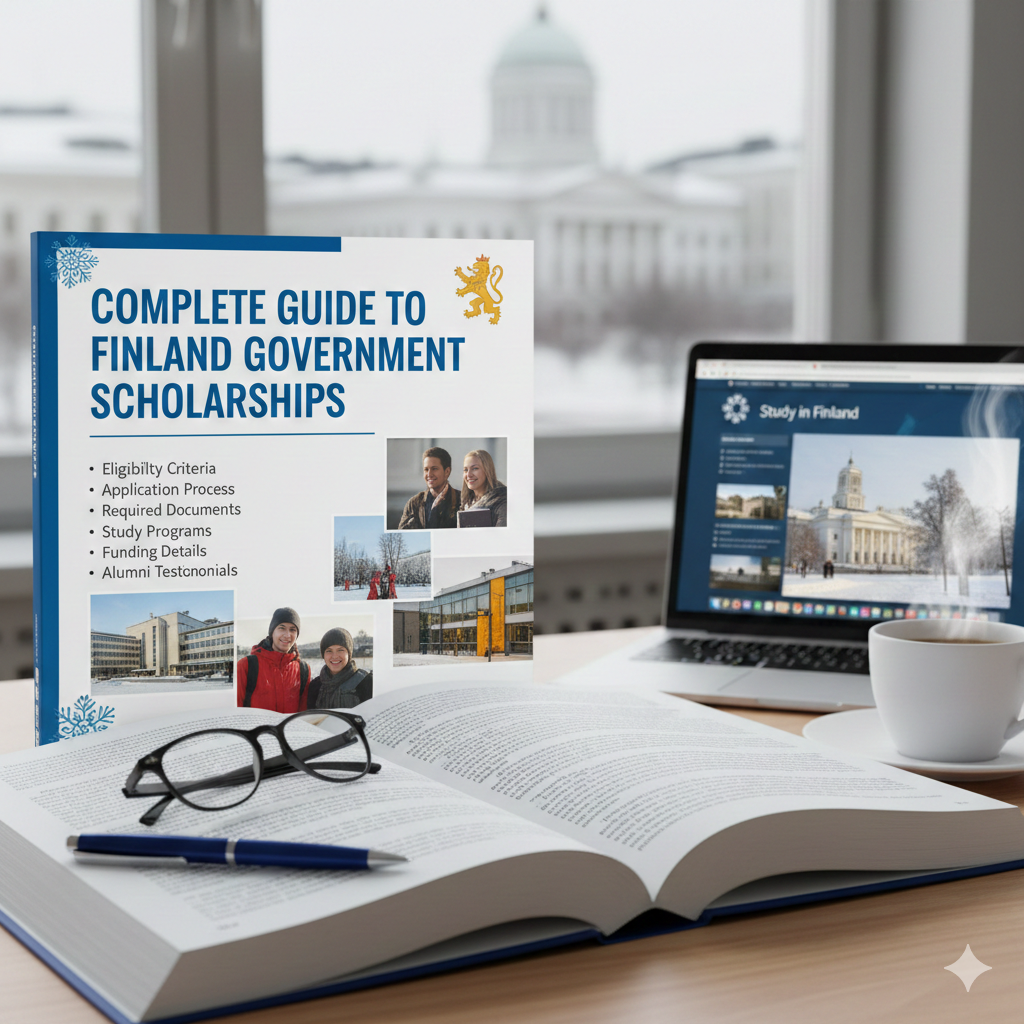
Getting a scholarship to study in Finland can feel like navigating a maze: different programs, shifting deadlines, and the constant question, which options are truly government-funded? If you’re an international student or researcher wondering which Finnish government scholarships exist, who’s eligible, and how to apply, this guide breaks it down step-by-step.
In plain language you can act on, you’ll find: what “government scholarship” means in the Finnish context; the main government-level and public research funding opportunities; eligibility and required documents by level (Bachelor, Master’s, PhD, researcher); a practical application timeline; what scholarships typically cover; tips to improve your chances; and a quick-start checklist so you can apply with confidence.
Wherever specific facts matter (residence permit rules, official lists), I point you to authoritative Finnish sources so you can verify dates and amounts.
Note: scholarship programs change and new calls open each year. Always confirm deadlines and conditions on the official program page before applying.
What “Finland government scholarships” actually covers
When people say “Finnish government scholarships” they typically mean one of the following categories:
- National-level scholarships and fellowships funded or coordinated by Finnish governmental bodies (ministries, national agencies, government-funded foundations).
- Public research grants and fellowships (e.g., Academy of Finland funding, national research fellowships) meant for doctoral candidates, postdocs, and researchers.
- Bilateral scholarship programs or development cooperation scholarships administered by the Ministry for Foreign Affairs or Finnish missions abroad for capacity-building (often for professionals from partner countries).
Scholarship pools and fellowship schemes coordinated by national agencies or foundations (for example, programs historically managed by the Finnish National Agency for Education or similar institutions).
Important: Many scholarship opportunities for degree students (Bachelor’s, Master’s) are offered directly by universities ,sometimes supported by government funding ,but they appear as university scholarships (tuition waivers, grants). These are separate from direct government fellowship calls for researchers.
Where to look first: official portals such as Study in Finland, national agencies, Academy of Finland and relevant ministry pages for the most up-to-date announcements.
Main types of Finland government scholarships and who runs them
Here are the most common program categories you’ll encounter:
EDUFI / National agency fellowships (research visits/mobility): Programs for visiting researchers and doctoral candidates are often coordinated by Finland’s national education and mobility agencies or their successor bodies.
Academy of Finland grants Competitive research funding for high-quality research projects, early-career and experienced researchers. These are research grants, not scholarships for degree studies, but they fund stipends and project budgets for researchers in Finland.
Ministry for Foreign Affairs (development cooperation scholarships): Scholarships linked to development cooperation, capacity building and bilateral agreements with partner countries, usually for professionals and mid-career trainees.
University and regional scholarships supported by government funds: Many Finnish universities allocate scholarship quotas (full or partial tuition waivers) for international students. These are managed by universities but can be part of national strategies to attract talent.
European and Nordic schemes administered in Finland: Finland participates in EU-level scholarships (Erasmus+, Horizon, Marie Skłodowska-Curie actions) and Nordic mobility funding, which are separate but often mentioned alongside government opportunities.
Who is eligible? (By level: Bachelor, Master’s, PhD, Researcher)
Eligibility differs widely by program, but these are typical rules:
Bachelor’s degree seekers: Finnish government-run grants for full-degree Bachelor’s students are rare. Most degree scholarships for international Bachelor’s students are university scholarships (tuition waivers). To qualify you usually need an offer of admission to a tuition-fee programme and to meet academic merit thresholds.
Master’s candidates: Many English-taught Master’s programmes offer university scholarships. Government-level scholarships aimed specifically at Master’s degree studies are less common; instead, look at university scholarships, regional scholarship pools, and bilateral government programmes where relevant.
PhD candidates: Government and public research funding is strongest at the doctoral and postdoctoral level. Eligibility often requires an accepted doctoral project at a Finnish university or a host researcher in Finland. Fellowship calls target early-stage researchers, visiting doctoral researchers, and postdocs.
Postdoctoral researchers and visiting scholars: This group is a primary target for government fellowships and Academy-level funding. Calls are often open to international applicants with a doctoral degree and a host institution in Finland.
Professionals from partner countries: Development cooperation scholarships usually target applicants from specific partner countries with employment or study-related goals tied to capacity building.
Common requirements across programs:
- Valid passport and proof of nationality
- University transcripts and diplomas
- Proof of admission (for degree scholarships) or an invitation/host affiliation (for researcher fellowships)
- Research proposal or study plan (PhD and researcher calls)
- Language test scores (IELTS/TOEFL) or proof of previous study in English/Finnish for English-taught programs
- Letters of recommendation and CV
Always read the program’s eligibility section carefully,many calls are restricted by nationality, field, or career stage.
What government scholarships typically cover
Coverage varies by program and by level. Typical elements include:
Tuition waivers: Often offered by universities; some government-backed scholarship schemes may provide partial or full tuition waivers for international students.
- Monthly stipend (living allowance): Research fellowships and postdoctoral grants often include monthly stipends to cover living costs. Degree-focused government scholarships may not always include stipends; universities sometimes offer additional living grants.
- Travel allowance: Some fellowship programs include a single travel grant or cover travel costs for incoming/outgoing researchers.
- Health insurance: Short research visits may be expected to have private travel insurance; degree students should verify coverage and arrange private or state-supported insurance as required.
- Research/project funding: Academy-level or project grants include budgets for research costs, conference travel, and sometimes salary for staff.
Important to note: The exact wording for what is included (taxable vs. non-taxable, paid monthly vs. lump-sum) changes by program. Always use the program’s official call text to confirm.
Practical tip: If a scholarship covers tuition but not living costs, you will still need to show you have sufficient funds for your residence permit, check the Finnish Immigration Service for the minimum amount required to secure a student residence permit (as of 2024 this is roughly €560/month, about €6,700/year,
Typical application process and timeline (step-by-step)
Below is a generic timeline you can adapt depending on the program. Always confirm exact dates with the program page.
1. Research options (6–12 months before planned start)-Use Study in Finland and official agency pages to list government and university scholarships relevant to your level and field
2. Check eligibility and required documents (6–10 months ahead)-Note nationality quotas, field restrictions, and whether a host supervisor is needed for research calls.
3. Prepare core documents (3–6 months ahead)-Transcripts, diplomas, CV, motivation letter, research proposal (PhD/postdoc), language test, references.
4. Find a host or apply for admission (if required) (3–6 months ahead)-For researcher fellowships, secure a host PI and a letter of invitation. For degree scholarships, apply to the programme and request scholarship consideration if required.
5. Submit scholarship application (2–4 months ahead)-Some scholarships require submission directly to a national agency; others are processed with your university application.
6. Interview or evaluation (varies) – Research fellowships may request interviews or referee checks.
7. Decision and acceptance (1–3 months before start)- If awarded, confirm acceptance and follow instructions for signing agreements and claiming funds.
8. Apply for residence permit (as soon as award letter received) – Use the award letter as evidence of funding when applying for a student or researcher residence permit.
9. Prepare travel and arrival logistics (1 month ahead)
Note: Government fellowship calls can have specific annual windows; start tracking them early and subscribe to alerts on official pages.
Documents you’ll almost always need (quick list)
- Valid passport (scan)
- Original degree certificates and transcripts which must be translated if the need be
- Letter of admission (for degree scholarships) or letter of invitation/host agreement for research fellowships
- Curriculum vitae (Europass-style is common in Europe)
- Motivation letter / personal statement
- Research proposal (PhD/postdoc calls- follow the program template)
- Letters of recommendation (usually 2–3)
- Proof of language proficiency ((IELTS/TOEFL or university exemption)
- Proof of previous employment or relevant professional background (for development cooperation scholarships)
- Health insurance evidence (for residence permit) or plan to obtain it
Tip: Keep both digital and certified paper copies ready,many Finnish institutions request original certified documents during enrolment.
How selection decisions are made
- Selection criteria for government scholarships usually include:
- Academic excellence and grades
- Quality and feasibility of the research proposal or study plan
- Fit with programme priorities and national policy areas (e.g., sustainability, digitalisation, health)
- Relevance to home-country capacity-building in bilateral scholarship schemes
- References and prior research or professional experience
Panel reviews and external experts frequently evaluate research fellowship applications. For university-administered scholarships, selection is often based on admission ranking and academic merit.
Timeline: decisions can take anywhere from a few weeks for university scholarships to several months for national fellowship competitions.
Living costs in Finland and managing finances while on scholarship
Finland is known for high quality of life, and correspondingly higher living costs compared with many countries. Key points:
Average monthly living costs for a student: typical personal budgets range between €700 and €1,200 per month depending on city and lifestyle.
Residence permit proof of funds: The Finnish Immigration Service (Migri) publishes the minimum maintenance requirement for residence permits. As of 2024 the guideline is roughly €560/month (about €6,700/year) but this changes, verify the current number on Migri’s site before you apply.
Cost-saving tips:
Choose university housing or student flats (cheaper than private market)
Cook at home and shop at discount supermarkets
Use student discounts for transport, culture and sports
Apply for university or municipal student benefits such as discounted public transport and cultural fees
If your scholarship does not cover living costs, consider part-time work: non-EU/EEA students can work during studies but must also respect the workload needed for successful completion of their studies and any visa restrictions.
Post-graduation: work rights, residence permits and staying in Finland
A scholarship does not automatically grant the right to stay and work after studies, but Finnish immigration rules provide pathways:
After completing degree studies, non-EU/EEA graduates may apply for a residence permit to seek employment or start a business in Finland. The conditions and length of the job-seeking permit change over time, so check for current rules and timelines.
If you find employment, you can apply for a work-based residence permit. Your scholarship status is separate from work eligibility; having a scholarship does not replace the need for a proper residence permit if you plan to stay and work.
Researchers funded by EU or national grants often receive residence permits tied to their research contracts, check the visa conditions linked to your fellowship.
Return-on-investment considerations:
Compare whether the scholarship provides sufficient living support and career benefits (networking, research visibility) to make the move worthwhile.
For PhD/postdoc funding, consider the academic output expectations (publications, patents, project deliverables) and how they align with career goals.
How to improve your chances (practical tips)
Start early. Government calls often have strict windows; collect documents months ahead.
- Tailor your proposal. Read the call text and highlight how your project aligns with programme priorities (e.g., sustainability, digitalisation, Arctic research).
- Secure a strong host (for research calls). A Finnish supervisor or research team endorsement significantly strengthens applications.
- Get high-quality references. Choose referees who know your work well and can comment on both your skills and fit with the programme.
- Follow formal requirements to the letter. Formatting, page limits and required signatures are taken seriously in competitive calls.
- Prioritize clarity and feasibility. A realistic timeline, clear milestones and a coherent budget make reviewers confident you can deliver.
- Use official templates. When a program provides templates for CVs, project plans or budgets, use them.
- Prepare for interviews. Some fellowships include interviews practice concise summaries of your research and its impact.
Common scams and how to verify official information
Red flags to watch for:
Unsolicited offers that ask for fees to process scholarship applications.
Emails or adverts with unofficial domains (e.g., Gmail, hotmail) claiming to be a government agency.
Requests to pay a “reservation fee” or “administrative charge” before receiving an official award letter.
How to verify:
Check official domains: government institutions in Finland usually use gov.fi, fi, or organization domains such as studyinfinland.fi, migri.fi, aka.fi, and university domains ending in .fi. If an offer comes from an unfamiliar domain, confirm with the institution directly.
Use official portals: start at Study in Finland, the Finnish Immigration Service (Migri), the Academy of Finland and individual university pages for authoritative information and contact details.
Contact the issuing institution directly using contact information from its official website.
Beware of urgent or pressure tactics, legitimate scholarship panels will follow formal timelines and provide written award letters with full terms.
Comparing government scholarships with university-specific scholarships
Government scholarships (research grants and national fellowships)
Best for doctoral researchers and postdocs
competitive and tied to research excellence
May include research budgets in addition to stipends
University scholarships (tuition waivers and grants)
Common for Master’s and some Bachelor’s programmes
Often based on admission ranking or specific merit criteria
May or may not include living cost support
Which is better? It depends on your level and goals. If you are a researcher looking to build a research profile, government and Academy grants can be transformative. If you’re applying for a Master’s degree, university scholarships are typically more relevant.
Example case study (how a typical applicant succeeds)
Background: A candidate from Kenya applies for a 2-year Master’s programme in environmental sciences in Finland and hopes for government-backed support.
Steps they took:
1. Researched degree programmes and noted which universities offered tuition scholarships for non-EU students on the Study in Finland portal.
2. Prepared transcripts, motivation letter and proof of English proficiency over three months.
3. Applied to two universities with required scholarship application forms attached to the admission application.
4. After receiving an admission offer with a university scholarship (partial tuition waiver), they accepted and used the award letter plus personal savings to meet Migri’s residence permit financial requirement.
5. Arrived, used university housing and student services to manage costs, and later applied for part-time employment allowed under their student residence permit.
Why this worked: The candidate matched scholarship criteria, applied on time, and used the official award letter to secure their residence permit.
Quick-Start Checklist: 10 steps to apply for Finnish government or government-backed scholarships
1. Identify the right program: use Study in Finland and Academy/agency pages to shortlist calls
2. Confirm eligibility: nationality, field, level and career stage.
3. Note deadlines and set a backward plan (document preparation, references, host contact).
4. Secure admission or a host institution if required (contact supervisors early).
5. Prepare core documents: CV, transcripts, diplomas, motivation letter, research proposal.
6. Collect references and request them early (allow 4–6 weeks).
7. Submit the full application via the official portal or university system well before the deadline.
8. If awarded, accept formally and keep copies of the award letter and contract.
9. Apply for your residence permit using the award letter as proof of funding
10. Prepare travel, insurance and housing; reach out to university student services on arrival.
Printable quick items to gather now:
Certified copy of diplomas
English language test (or proof of exemption)
Research proposal draft (if applicable)
Contact details for 2–3 referees
Useful official resources (start here)
Study in Finland, Scholarships & Financing: an official, regularly updated portal listing scholarships and student funding options in Finland.
Academy of Finland,Research funding and grants for researchers.
Finnish Immigration Service, Student and researcher residence permits and financial requirements.
University scholarship pages,check the scholarship pages of the universities you’ve applied to (for example,
University of Helsinki scholarship information)
Ministry for Foreign Affairs of Finland -information on bilateral and development cooperation scholarships
Always use these official pages for final confirmation on deadlines, eligibility and award conditions.
Final tips and Frequently Asked Questions
Q: Are there government scholarships for full-degree Master’s students?
A: Direct national government scholarships for full Master’s degrees are uncommon. Most Master’s students rely on university scholarships (full or partial tuition waivers) or external funding. Always check Study in Finland and university scholarship pages for the latest offerings
Q: Can a scholarship guarantee a residence permit?
A: No. A scholarship award letter is used as proof of funding when applying for a residence permit, but you must still meet Migri’s rules and provide any other required documentation.
Q: How do I avoid scams?
A: Only follow information from official domains (studyinfinland.fi, migri.fi, aka.fi, gov.fi, and university .fi pages). Never pay fees to “reserve” a scholarship legitimate awards come with official documentation and signed agreements.
Q: What fields get priority in government research funding?
A: While priorities shift, areas like clean technology, digitalisation, health and life sciences, Arctic studies and sustainable development frequently receive focused funding. Read individual calls to confirm current priorities.
Conclusion
If you want to study or research in Finland with government-level support, start by identifying whether your level and field match national or university scholarship types.
For doctoral researchers and postdocs, national fellowships and Academy of Finland grants are powerful pathways. For Master’s and Bachelor’s applicants, look closely at university scholarships but keep an eye on bilateral programmes if you’re from a partner country.
Next step step to follow
1. Bookmark Study in Finland, Migri and Academy of Finland pages and subscribe to alerts.
2. Make a calendar with deadlines for admissions and scholarship calls (start now for the next academic year).
3. Draft your CV, study/research plan and request references so you’re ready when calls open.
Want a tailored checklist or help reviewing a research proposal or scholarship essay? Reach out to your prospective university’s admissions or international office, they often provide application advice, and use official program pages for final verification.
Good luck with preparation and targeted effort, Finland’s high-quality education and research ecosystem can be within reach.
![MIT Scholarships Guide [2025]: How to Apply and Win](https://jobmac.org/wp-content/uploads/2025/08/file_0000000038b46243b0f0c5fe02a3d783-1024x683.png "MIT Scholarships Guide [2025]: How to Apply and Win")